WooCommerce is one of the most flexible ecommerce platforms. But as order volume grows and logistics becomes more complex (multiple warehouses, multiple countries, 3PLs, retail, B2B), native order management quickly reaches its limits.
That is where an OMS (Order Management System) becomes strategic.
An OMS helps you:
- centralize orders (store, marketplaces, retail)
- synchronize inventory in near real time
- orchestrate allocation across warehouses
- automate fulfillment rules
- connect ERP, WMS, 3PLs, and carriers
- improve operational performance and customer satisfaction
Here is our selection of 10 OMS solutions that can work well with WooCommerce, including advanced orchestration platforms and more hybrid options (ERP, shipping, inventory).
1. Spacefill
Type: Specialized logistics & 3PL orchestration OMS
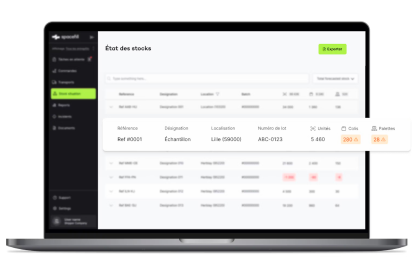
Spacefill is one of the most relevant OMS options for WooCommerce businesses with complex logistics.
Unlike OMS tools primarily designed for omnichannel retail, Spacefill is built to connect brands, ecommerce businesses, and logistics providers (3PLs) in a single collaborative platform.
What makes it different
Spacefill goes further than classic orchestration:
- native multi-3PL connectivity
- multi-WMS synchronization
- unified visibility on distributed inventory
- advanced allocation rules
- 3PL SLA monitoring
- multi-country orchestration
Why it matters for WooCommerce
WooCommerce is powerful for acquisition and storefront customization.
But when you deal with:
- multiple warehouses
- mixed B2B and B2C flows
- marketplaces
- several logistics partners
- shipping cost constraints
orchestration becomes the key performance factor.
Spacefill turns WooCommerce into a sales hub connected to an industrialized logistics ecosystem.
2. Fluent Commerce
A cloud-native OMS designed for complex omnichannel environments.
Even if it is not specific to WooCommerce, it can be integrated via API or middleware to orchestrate WooCommerce orders.
Why use it with WooCommerce
- intelligent order allocation
- multi-warehouse support
- ship-from-store
- omnichannel orchestration
Best for retailers using WooCommerce as one channel in a broader architecture.
3. OneStock
An OMS focused on unifying inventory across stores and warehouses.
Connected to WooCommerce, it can:
- enable store inventory for WooCommerce orders
- optimize routing
- reduce stockouts
Great fit for omnichannel retailers.
4. Salesforce Order Management
Primarily designed for Commerce Cloud, but can be connected to WooCommerce via APIs.
It enables:
- end-to-end order lifecycle management
- refunds automation
- smart allocation
- international orchestration
Best for organizations already in the Salesforce ecosystem.
5. Fabric OMS
A modern OMS built for headless architectures.
In a WooCommerce context:
- centralizes orders
- supports smart allocation
- manages distributed inventory
- scales internationally
Good fit for fast-growing, tech-forward brands.
6. ChannelApe
Designed to synchronize WooCommerce with multiple logistics partners.
It enables:
- automatic routing to 3PLs
- inventory synchronization
- workflow automation
Good fit for multi-channel merchants.
7. Order Desk
Popular in the WooCommerce ecosystem.
It provides:
- order centralization
- customizable rules
- routing automation
- many 3PL integrations
A solid option for SMBs.
8. BoostMyShop
Offers an OMS module that can support WooCommerce.
It focuses on:
- multi-warehouse management
- smart allocation
- picking efficiency
Oriented toward operations.
9. Extensiv
A strong fit for WooCommerce merchants working with 3PLs.
It provides:
- multi-warehouse synchronization
- centralized visibility
- logistics orchestration
Good for distributed models.
10. NetSuite Order Management
An advanced module within NetSuite.
In a WooCommerce context, it can support:
- comprehensive order management
- finance & supply chain integration
- multi-channel orchestration
More heavyweight, but very complete.
Why connect an OMS to WooCommerce
WooCommerce runs your storefront.
A WooCommerce OMS runs fulfillment orchestration.
If you have:
- 500+ orders per month
- multiple warehouses
- 3PLs
- international expansion
then an OMS becomes a strategic lever to:
- reduce errors
- optimize costs
- improve delivery times
- support sustainable growth
How to choose the right OMS for WooCommerce
The best OMS depends on:
- your logistics complexity
- your business model (D2C, B2B, retail)
- how dependent you are on 3PLs
- your international roadmap
If your main challenge is multi-actor logistics orchestration around WooCommerce, a specialized OMS is often more relevant than a general ERP.
FAQ


.%20Un%20vaste%20espace%20organis%C3%A9%20avec%20des%20rayonnages%20m%C3%A9talliques%20re%20(1).webp?width=352&name=DALL%C2%B7E%202025-01-24%2012.15.39%20-%20Une%20sc%C3%A8ne%20moderne%20repr%C3%A9sentant%20un%20entrep%C3%B4t%20logistique%20de%20type%203PL%20(Third-Party%20Logistics).%20Un%20vaste%20espace%20organis%C3%A9%20avec%20des%20rayonnages%20m%C3%A9talliques%20re%20(1).webp)